1981 was a different time for computing. It was expensive (both hardware and software), and it was far from a given that machines from one vendor would be able to talk to those from another. In fact, Columbia University had just such a problem, so in 1981, Frank da Cruz and Bill Catchings designed a serial protocol they called Kermit. Because of the many quirks of the DEC-20 and IBM mainframes, the Kermit protocol was highly adaptable from the start: able to handle systems that had trouble processing more than 96 bytes of data at once, able to transfer 8-bit files over 7-bit links, able to translate between character sets (ASCII and EBCDIC then; now also various Unicodes), and of course, handling of error-prone serial links.
Kermit spread rapidly; by 1982, Kermit had been ported to MS-DOS and Unix. Eventually, C-Kermit (an implementation of Kermit in C) became the flagship Kermit. It gained TCP support, an interactive CLI, a powerful scripting language (with features from the shell, Lisp, and expect), and optimizations for today’s high-speed links, such as jumbo packets, sliding windows, and streaming modes. Along the way, Kermit flew on the International Space Station, ran data collection from sensors during hurricanes, and many other uses including postal systems, Boeing 787 manufacturing, and more.
Today, I use it as a powerful ssh wrapper (letting me easily transfer files through multiple nested ssh, sudo, su, etc. commands), a BBS client, to exchange data with my HP 48GX calculator, and so on. It’s also used today to transmit firmware updates to embedded devices. And, of course, anyone that works with vintage systems is likely to use Kermit at some point.
It wouldn’t be until the late 1990s that the TCP/IP stack was finally adopted by most OS vendors, establishing something of a common basis for communication. Of course, we assume this today. Though transferring large files between OSs (say, Linux, Windows, MacOS, Android, iPad, etc.) is still a challenge, even though they all speak TCP/IP! I find that the easiest way to get large files from two computers is to spin up Kermit (see ckwin for a Windows fork of C-Kermit) and just set up a TCP connection over the LAN. In fact, I added a new show interfaces command in C-Kermit 11, making it easy to see your system’s local IPs.
For most of its history, Columbia’s Kermit project was self-funded. Columbia charged for commercial use, which limited its inclusion in Linux distributions. In 2011, 30 years after its founding, Columbia canceled the Kermit Project and released C-Kermit as Open Source under a BSD license. Frank da Cruz, who had still been working with the Kermit project all those years, volunteered to continue maintaining Kermit outside Columbia, and continued development with alpha and beta releases through his retirement from the project in 2025.
I dive into this C codebase
As Debian maintainer of Kermit, I noticed some areas where it wasn’t matching modern expectations. One area was, not surprising for a project of its age, security. Another area was that its character set or line-ending conversions are usually not desired now; we are used to byte-identical binary transfers, and the defaults caused confusion and even some rare instances of data corruption. So I started making a few patches last year.
I’ve worked with old C codebases before, such as Varnish. I’ve generally hated it. You usually find a mix of bad and terrible practices, unclear memory management, and so forth.
But I’ve been living in the C-Kermit codebase for a few months now, and I enjoy it. Yes, this thing is still designed to build on VMS, OS/2, and with compilers that haven’t heard of ANSI — and those that require modern practices. (That em-dash was mine; I knew how to use them before LLMs existed and I’m not going to stop just because LLMs have copied people like me! No AI was used for this post.)
There is an elegance in all of that. As I worked, I fixed a bunch more potential security issues, both with memory safety and with protecting against a malicious remote in roughly the same manner that some patches to scp did a few years back. I added IPv6 support, of course conditionally compiled because some systems C-Kermit builds on have never heard of IPv6 and never will. (And, of course, with fallback algorithms at runtime for systems that have IPv6 support but not IPv6 connectivity.)
I added unit tests and Python-based end-to-end tests, running nearly 2000 test cases in total. Along the way, I found and fixed a number of bugs going back decades. I learned about FIONREAD being broken on macOS, about NetBSD’s bugs in the pty driver, and fixed bugs in the Kermit protocol implementation itself. I added compatibility tests with the gkermit and ekermit (embedded) implementations, as well as the last full release, C-Kermit 9.0.302 from 2011 (which was difficult to get compiled on a modern system).
There is an extensive changelog describing all the improvements in C-Kermit 11.
C-Kermit development had never really used a VCS at any point, though Kermit veteran Jeffrey Altman imported historical releases into a Git repo, along with some patches that hadn’t made it into a release (which I also pulled in.) There was a lot of disabled code behind #ifdef COMMENT, along with commentary describing why it was no longer used. With Git, we would now generally just remove the old code and explain why in a commit message. I went through and did so with a lot of it, meaning that, at last check, C-Kermit actually has fewer lines of code now than it used to.
Towards a new release
It became apparent pretty quickly that I was making more changes than would make sense as a Debian patch series. Not only that, but they would be more widely applicable to more than just Debian and Ubuntu users. As Linux and BSD distributions were running everything from the last non-beta release (2011’s 9.0.302) to the last beta release (about 1.5 years ago), depending on their different policies about running betas, even sharing patches in a useful fashion was going to be quite difficult.
So, I spun up a project at Open Kermit to coordinate future development in the open and keep Kermit going.
With modern CI, I run that test suite on Linux (x86_64 and arm64), macOS, FreeBSD, NetBSD, and OpenBSD. It builds binary releases on all those platforms, plus a statically-linked Linux binary built with musl libc.
You can download the latest C-Kermit release, and of course contribute to C-Kermit and its website.
Dedication
Frank da Cruz was directly involved with Kermit for 44 years. I’m not aware of any other Open Source project founder being involved for so long. Richard Stallman started working on GNU Emacs in 1984, 3 years after Frank started working on Kermit, but Richard hasn’t been in that role since around 2008.
Accordingly, C-Kermit 11 bears this dedication:
I dedicate this release of C-Kermit to Frank da Cruz.
Frank was directly involved with Kermit for 44 years, from its initial design in 1981 all the way through 2025. He maintained Kermit as an Open Source project after Columbia University ended its sponsorship. I know of no other Open Source project where the founder remains so personally involved for so long.
When Kermit was begun, transfers between different hardware and operating systems were difficult or impossible. Frank helped build a bridge. Kermit glued systems together, from the International Space Station to pocket calculators, and set a new standard for interoperability. It continues to do so.
Kermit is still one of the quietly-working pillars of computing today, enabling everything from firmware upgrades to radios. And, yes, it still reliably transfers files over serial lines.
As we start to spend a lot of time in the Kermit codebase, we do so standing on the shoulders of a giant. Thanks, Frank, for your decades of work on Kermit.
John Goerzen, July 2026
















































































Yes, the guy that resurrected UMN #gopher is at it again. This time, I've made the first new #Kermit release in 15 years! https://changelog.complete.org/archives/44456-celebrating-45-years-of-kermit-with-the-first-new-c-kermit-release-in-15-years-and-working-with-a-decades-old-c-codebase This protocol, originally for serial lines, lives on and I use it as a powerful ssh wrapper daily. I added a modern test suite, fixed a ton of bugs, added IPv6 support.
And, rather to my surprise, ENJOYED working in a legacy #C codebase.
1/
Remote Reply
Original Comment URL
Your Profile
Why do I need to enter my profile?
This site is part of the ⁂ open social web, a network of interconnected social platforms (like Mastodon, Pixelfed, Friendica, and others). Unlike centralized social media, your account lives on a platform of your choice, and you can interact with people across different platforms.
By entering your profile, we can send you to your account where you can complete this action.
Also see my dedication to Frank da Cruz in the changelog at https://github.com/OpenKermit/ckermit/releases/tag/v11.0.506 . Frank was one of the designers of #Kermit in 1981, and was actively involved in the project until last year — 44 years, which I believe is a record for the involvement of a project founder in an Open Source project!
kermit
Release v11.0.506 · OpenKermit/ckermit
@jgoerzen I have to admit, I didn’t know much about kermit, other than occasionally seeing logged-in users showing kermit in use. The built in file transfer is HUGE. It may seem like it isn’t but considering how often we’re accessing internally routed hosts, NOT having to open a separate sequence of windows to do something as simple as file editing. I have a daily use-case for this software.
@desantis Yep, I love it for just that reason! I have two pages talking about it. There’s a quick tour as part of the intro at https://www.openkermit.org/ckermit/intro/#quick-tour-as-a-ssh-wrapper and then a more elaborate exposition at https://www.openkermit.org/ckermit/ssh/ .
Introduction to C-Kermit
@jgoerzen Haha, I made sure to RTFM those pages before responding :) Already sharing this info with other admins here!
@jgoerzen awesome!
Do you know if there are any plans for the same sort of thing for gkermit?
Remote Reply
Original Comment URL
Your Profile
Why do I need to enter my profile?
This site is part of the ⁂ open social web, a network of interconnected social platforms (like Mastodon, Pixelfed, Friendica, and others). Unlike centralized social media, your account lives on a platform of your choice, and you can interact with people across different platforms.
By entering your profile, we can send you to your account where you can complete this action.
Not as far as I know. gkermit had several goals, and one was being able to be included in Linux distributions at a time when Columbia’s license on C-Kermit prevented that. Another was having a small footprint. Now that C-Kermit is BSD-licensed and has a footprint that is tiny by modern standards, there’s not as much demand for gkermit anymore. That said, the source is out there if someone wants to do the same!
@jgoerzen
w00t!
kermit was my favorite serial program.
@paul_ipv6 Right on! I asked my first question about #Kermit on Usenet in 1996!
If you happened to enjoy using #BBSes back in the day, Kermit’s character set translation feature makes it really easy to connect to a telnet #BBS and see ANSI CP437 graphics in today’s UTF-8 world. https://www.openkermit.org/ckermit/bbs/ tells how.
One command does it: “set terminal character-set cp437 utf8”. Also it’s bidirectional!
BBS
bbses
kermit
Using C-Kermit to connect to a DOS BBS
@paul_ipv6 Also given your username, I should mention I added IPv6 support to Kermit, and have a whole page about it at https://www.openkermit.org/ckermit/ipv6/
IPv6 in C-Kermit
@jgoerzen i love those features, but i don’t like the idea of starting SSH sessions with kermit as a wrapper systematically, and then i bet that when i’ll need it i won’t have a kermit wrapped SSH, how do you deal with that?
@jgoerzen i also have a billion questions around mesh protocols and BBS… it seems like people are reinventing the wheel a bit there no? do you run a BBS over your local mesh?
@Anarcat I do just start it wrapped systematically. The only difference is that the escape character is (by default) Ctrl- instead of ~. Which, honestly, makes a lot more sense anyhow 🙂
You can, of course, spin up a separate session when you need it. In some cases, it may be no more helpful than scp, but if you need to, say, hop across a sudo somewhere, having the transfer inband is still useful.
@jgoerzen omg but how do you SIGQUIT! ;)
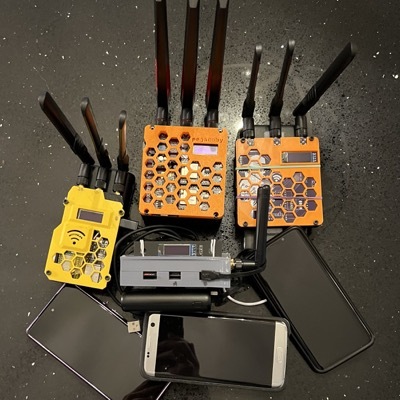
@Anarcat I haven’t seen people running a full BBS over a local mesh, at least not much. On Meshtastic, there is some support for this, but due to its very low bandwidth, a DOS-type BBS would be too demanding. It’s mostly like a text CLI. Similar existed in the ham radio world over packet; F6FBB for instance.
@Anarcat Ctrl- Q will do the trick :-)
@Anarcat @jgoerzen
I saw a project that claims to be a meshtastic bbs and saved a link to them.
https://github.com/TheCommsChannel/TC2-BBS-mesh?tab=readme-ov-file
The readme links to a youtube channel with a demo.
It looks very simple menu based, and I have no idea how well it works.
Meshcore has something they call room servers which provide store and forward messaging and an ability to control who can connect to the room server.
https://www.73mesh.com/2025/11/19/RoomServers.html
GitHub – TheCommsChannel/TC2-BBS-mesh: A BBS server for Meshtastic for posting bulletins, sending mail to users, and channel directory.
@alienghic @jgoerzen yeah, i’m familiar with many different BBS implementations, including meshcore room servers. the latest i’ve heard of is https://github.com/Mesh-America/supply-drop-bbs – here i was mostly looking for input from an experienced BBS operator :)
GitHub – Mesh-America/supply-drop-bbs: A BBS designed for the mesh, with high performance, excellence in security and freedom as core values.
@Anarcat @jgoerzen
Oh neat.
@jgoerzen right, i was thinking of a CLI-only, not TUI. what i’ve seen in ham-land feels… really dated!
@jgoerzen I’m still using MS-Kermit on 16-bit. I recently pushed some patches to make it pass vttest cursor test cleanly: https://github.com/aakoskin/MSK316
GitHub – aakoskin/MSK316: MS-Kermit 3.16 patches
…the Frog? #kermit
Remote Reply
Original Comment URL
Your Profile
Why do I need to enter my profile?
This site is part of the ⁂ open social web, a network of interconnected social platforms (like Mastodon, Pixelfed, Friendica, and others). Unlike centralized social media, your account lives on a platform of your choice, and you can interact with people across different platforms.
By entering your profile, we can send you to your account where you can complete this action.
@jgoerzen now that is a name I've not heard in a long, long time…
I was a maintainer of Kermit for a number of years. C-Kermit on Atari ST, Kermit65 on Apple ][ and 8bit Atari, and *Kermit on MTS mainframe. Haven't touched any of it since the 1990s after I had 9600baud serial line internet access.
Remote Reply
Original Comment URL
Your Profile
Why do I need to enter my profile?
This site is part of the ⁂ open social web, a network of interconnected social platforms (like Mastodon, Pixelfed, Friendica, and others). Unlike centralized social media, your account lives on a platform of your choice, and you can interact with people across different platforms.
By entering your profile, we can send you to your account where you can complete this action.
Wow! Your name is still in there: https://github.com/OpenKermit/ckermit/blob/abe250a1db65fd4033adae08901af769d311ddaa/ckcmai.c#L332 and https://github.com/OpenKermit/ckermit/commit/9438f560bcb06e92821d7131dbea731fae62c49e Frank’s archive has all those versions also: https://kermitproject.org/archive.html
And now I’m going to have to read up on MTS tonight.
@aakoskin That makes my day! Will you also be publishing new binary builds? All of a sudden, I have this urge to investigate running DOS builders in Github Actions :-)
All I can say is that last month I rescued an old (presumed dead) HP48 calculator.
After successfully reviving the electronics, it was time for the software: a simple serial cable and the old trusted c-Kermit to the rescue. Thank you Mr. Goerzen.
I still have my HP48, but my college-age son has commandeered it for his classes, so I don’t get to use it very often. Though, through an emulator, it is my primary Android calculator still. Glad it helped!
@Anarcat @alienghic Interesting. I hadn’t heard of that one! I ran a packet BBS briefly, and of course a BBS under OS/2 back in the day. I don’t know how much that qualifies me to talk about mesh BBSs :-) It strikes me as pretty similar to the packet radio BBSs like F6FBB (which are, indeed, dated though). A bit disappointed in that license. I get why people do that, but heck, even the Kermit story I wrote about today has some cautionary tales about that.
@jgoerzen ugh, i hadn’t noticed the license, that’s unfortunate… but then again, this was probably almost entirely fired out of a coal power plant, sorry, a large language model, so presumably one could write a thing like this from scratch by burning another Spokane to the ground, with the right license, right?
In the late 80’s through the middle of the first decade of the century (“the middle of the 2000s” seem wrong…) I was a keeper of trivia of PC UNIX serial ports, as a firmware/driver engineer making high-performance multiport serial boards and multimodem products and later a kernel dude at a UNIX company. I’d comped him some hardware along the way I was still (very intermittently) helping Frank as recently as 2022. He was (is?) committed to the craft, for sure.
https://github.com/OpenKermit/ckermit/blob/abe250a1db65fd4033adae08901af769d311ddaa/ckcmai.c#L453
Makes the 25 years on my own open source project, GPSBabel, seem childish.
Wow, small world. Thatnks for that help along the way!
And thank you for GPSBabel! I have probably been using it for all of those 25 years. Initially with some old Garmin GPS devices I barely remember the name of (GPS III and eMap maybe?), and now still to process and convert logs from flights in my little plane. I have a little script that does: gpsbabel -t -i kml -f “$1” -x simplify,count=2000 -o unicsv -F “$1.csv”
I, in fact, packaged up gpsbabel for Debian in 2004 and maintained it there until 2008.
I just looked carefully at my mail. We share something else. :-) (Beyond the blessing/curse of relatively unique last names that make mailbox searches unambiguous.)
And, yes, I see you back to 2005. /waves! :-)
@jgoerzen No one will ever pay tribute to a code-mangling LLM in this way.
Remote Reply
Original Comment URL
Your Profile
Why do I need to enter my profile?
This site is part of the ⁂ open social web, a network of interconnected social platforms (like Mastodon, Pixelfed, Friendica, and others). Unlike centralized social media, your account lives on a platform of your choice, and you can interact with people across different platforms.
By entering your profile, we can send you to your account where you can complete this action.
@Anarcat I was afraid of that. I didn’t click around enough to confirm it but it had some of those vibes indeed.
@jgoerzen now that I think about it, Kermit was actually the first kind of networking that I ever used, trying to get some stuff on my then brand new calculator (HP48G. The calculator is still around and still works, but I rarely use it. The emulator on my phone though is in daily use.
@blackopelves I also used Kermit on my HP 48GX back in the day! I still have mine too, but my son doesn’t let me use it much because he uses it for his classes! I run it on Droid48.
@jgoerzen what about archived resources old kermit code. I sometimes still use kermit on MS-DOS/FreeDOS. Should I download and preserve all this code in my private library?
Remote Reply
Original Comment URL
Your Profile
Why do I need to enter my profile?
This site is part of the ⁂ open social web, a network of interconnected social platforms (like Mastodon, Pixelfed, Friendica, and others). Unlike centralized social media, your account lives on a platform of your choice, and you can interact with people across different platforms.
By entering your profile, we can send you to your account where you can complete this action.
I operate a mirror at https://kermit.mirrors.quux.org/ by permission. I also uploaded copes to the Internet Archive at https://archive.org/details/kermit-archives-2024-08-27 and https://archive.org/details/kermitmirror-2024-08-26 . I have periodically refreshed my mirror, so maybe it’s about time for another IA upload also.
Hey @jgoerzen – thanks for working on #kermit! 👏
After decades, It is still my go-to daily driver talking to embedded boards. Checking the situation, I _am_ already using your new version without having relized it – 11.0.504 from #Trixie. Amazing! ❤️
https://changelog.complete.org/archives/44456-celebrating-45-years-of-kermit-with-the-first-new-c-kermit-release-in-15-years-and-working-with-a-decades-old-c-codebase
Remote Reply
Original Comment URL
Your Profile
Why do I need to enter my profile?
This site is part of the ⁂ open social web, a network of interconnected social platforms (like Mastodon, Pixelfed, Friendica, and others). Unlike centralized social media, your account lives on a platform of your choice, and you can interact with people across different platforms.
By entering your profile, we can send you to your account where you can complete this action.
I happen to also be a Debian developer, so yes, you will be the first to get new versions :-)
Flying on the ISS is wild context for a file transfer protocol. Curious what the biggest pain points were modernizing a codebase that predates most of our current tooling by decades, especially around the 8-bit over 7-bit link handling.
Remote Reply
Original Comment URL
Your Profile
Why do I need to enter my profile?
This site is part of the ⁂ open social web, a network of interconnected social platforms (like Mastodon, Pixelfed, Friendica, and others). Unlike centralized social media, your account lives on a platform of your choice, and you can interact with people across different platforms.
By entering your profile, we can send you to your account where you can complete this action.
It wasn’t what I’d expected. I’ve worked with legacy C codebases before, and they were generally a massive mess. C-Kermit had already been modernized in the 10.x betas, to an extent. Everything supports ANSI C at least (gated behind ifdefs so the pre-ANSI compilers still work!)
The biggest issues were the race conditions. Kermit uses alarm() to handle timeouts, and, in some cases, siglongjmp() to deal with them. This caused a number of problems: calls that didn’t properly retry on EINTR, messed up context when jumping out of somewhere sensitive (especially when jumping out of OpenSSL frames), etc. Most of these were provoked by running the new test suite under very high load on multiple platforms. For instance, some might happen only on NetBSD or only on macOS, and only with 8 or 64 testing threads or something.
Kermit itself isn’t multithreaded; it predates pthreads by a long while. While we might today use a multithreaded approach, Kermit uses the Old Tools. They still work fine, but have some sharp edges (in fairness, so do threads).
The second class of challenge relates to security. There were the obvious uses of sprintf()/strcpy()/etc. There were some less-obvious things related to outdated design decisions. It was originally a feature to use kermit to log in to a remote, and then you could run kermit on the remote and it could cause your local machine to do stuff (the protocol can carry commands and files, bidirectionally). Most of the machinery to clamp down on that was already there; it was a matter of understanding the problem, thinking through the possible consequences of the problem and of the change, and making the change. Some other things lacked adequate protections, so I added them. scp went down a somewhat analogous path a few years ago, incidentally.
There are some areas of the code where Kermit rolls its own rather than using an existing solution. For instance, it has a HTTP client, FTP client, telnet client, and CLI interface. Some of these one might think of using an off-the-shelf library like libcurl or readline. Perhaps the HTTP and FTP clients will go that way some day (I honestly haven’t looked into this yet). But Kermit’s CLI is unique and rather special in its TOPS-20 sort of feel, and deeply inmeshed with the program, and I think ripping it out and replacing it with readline would be loss of functionality and not worth the substantial effort.
Wow, all of this takes me back. I still remember taking the SuperBrain manual to my in-laws house over Christmas in 1980 to try and understand how to program it. Very cool to see people still using Kermit and helping to keep it going.
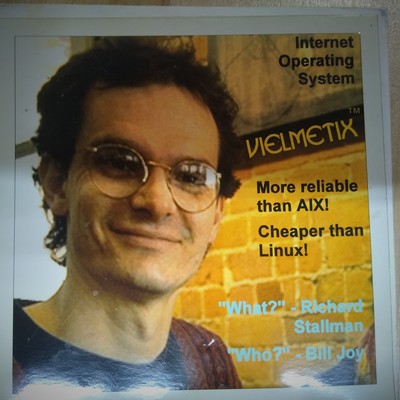
Bill, thanks for dropping by! I was pointed to your blog post at https://www.billcatchings.com/2012/04/frog-from-my-past.html yesterday (and had previously found the CHM transcripts, but sadly not the video). Thanks for your contributions to those early days of Kermit! I happen to have the opportunity to visit CHM in the near future and hope they might be able to show me some of those items also.
I first corresponded with Frank da Cruz when I was the TOPS-20 systems programmer at Stanford LOTS (the academic computing facility), and variously over the years following.
In 2006, when I put Paul Allen's Tops-10 system (a DEC-20 running the other OS) on the net, Frank helped me get in touch with the original Tops-10 Kermit developer to fix some issues we found.
BRAVO!
https://changelog.complete.org/archives/44456-celebrating-45-years-of-kermit-with-the-first-new-c-kermit-release-in-15-years-and-working-with-a-decades-old-c-codebase
Remote Reply
Original Comment URL
Your Profile
Why do I need to enter my profile?
This site is part of the ⁂ open social web, a network of interconnected social platforms (like Mastodon, Pixelfed, Friendica, and others). Unlike centralized social media, your account lives on a platform of your choice, and you can interact with people across different platforms.
By entering your profile, we can send you to your account where you can complete this action.
@jgoerzen
Bravo for you sir. However thinking of …
"Flon's Law: There is not now, and never will be, a language in which it is
the least bit difficult to write bad programs."
And an OSS emulator in C I recently looked at, I reminded that C can be a poster child for Flon's Law.
I am delighted that you left the campsite cleaner than you found it.
Remote Reply
Original Comment URL
Your Profile
Why do I need to enter my profile?
This site is part of the ⁂ open social web, a network of interconnected social platforms (like Mastodon, Pixelfed, Friendica, and others). Unlike centralized social media, your account lives on a platform of your choice, and you can interact with people across different platforms.
By entering your profile, we can send you to your account where you can complete this action.
Flying on the ISS is a detail I had never connected to Kermit before. Curious what the biggest pain points were bringing a 15-year-old C codebase up to modern compilers without breaking the protocol semantics.
Remote Reply
Original Comment URL
Your Profile
Why do I need to enter my profile?
This site is part of the ⁂ open social web, a network of interconnected social platforms (like Mastodon, Pixelfed, Friendica, and others). Unlike centralized social media, your account lives on a platform of your choice, and you can interact with people across different platforms.
By entering your profile, we can send you to your account where you can complete this action.
@jgoerzen Awesome write-up. Also, I hate it so much that you have to explain that the em dash is yours. One of the many things the LLMs have ruined for us.
Remote Reply
Original Comment URL
Your Profile
Why do I need to enter my profile?
This site is part of the ⁂ open social web, a network of interconnected social platforms (like Mastodon, Pixelfed, Friendica, and others). Unlike centralized social media, your account lives on a platform of your choice, and you can interact with people across different platforms.
By entering your profile, we can send you to your account where you can complete this action.